Glue bundling update…
I’ve had many requests about the glue bundled with frames. Just a review, it was my intention to sell the glue ONLY bundled with my frames due to the hassles, expense, and time importing the glue.
However, I’ve been dragging my foot for 2 reasons and I’ve decided against it. Here’s why:
1. My goal has been to put women in business by teaching them a skill. My PDF tutorials do NOT limit clutch-making to just my frames. Never has. You can buy any u-channel purse frame from any seller and make your own clutch. With my bonus tutorial, you can learn how to make a template for any purse frame too. The basic skill needed to make a clutch is what I wanted to teach women. I could have done it in a way to restrict it to only my frames, but I wanted to democratize it so the tutorials have always have women how to make a clutch using any frames.
2. If I sold the glue by bundling it with my frames, that would negate this ideal because that would bar other clutch-makers who buy frames from other sellers but need glue. I take pride in providing everything to my customers to enable their success. I’ve thought “why should I sell my glue that I have so much trouble importing to those who will buy frames from someone else?”. And that’s a struggle since I love (and am admittedly biased towards) my frames. But if I sold glue only bundled with my frames, it goes against my mission of democratizing it and to teach women a skill that won’t limit them to just my goods.
It is because of this that I hope you understand why I’ve changed my mind about bundling the glue with frames. I am very open about my policies and thoughts, and sometimes, it requires deeper thought before affecting a change. I know many of you would like the lower cost of the bundled products. In the next couple of months, I still may offer bundled frames+glue in addition to glue alone. But I will not restricting the Gutermann glue only to those who buy my frames. (I wish you would buy from me exclusively, but …. the choice has always been yours to make and will remain so.)
Thoughts? Comments? Contact me at any time.
~Winn
The importance of the bottom seam!
Do it right the first time: make your clutch with a bottom seam.
I am following up on my previous post about squaring off your corners.
For non-directional fabric, it’s easy enough to make your clutch without a seam on the bottom. How? Trace your pattern as normal. Then double up the pattern (the 2 trapezoids) with the bottom edge abutting each other. (*”Hey Beavis, she said “aBUTTing” – hehe*”) 🙂
Your new pattern will look like a hexagon. I’ll make a quick drawing of what I mean:

You are essentially making one big piece of fabric that is hexagonal in shape and revising step #7 and not sewing the bottom seam.
You would then square off your corners just the same as before.
This is a nice shortcut if you have non-directional fabric – those patterns that do not have an upright direction. Please refer to my previous post to see examples.
However, and it’s a big however, I am a believer in doing things right the first time. All my clutches are made as per the PDF tutorial: they are all made with a bottom seam.
Why?
1. structural stability: it will not roll over and flop over. The bottom seam anchors the clutch.
2. structural integrity is not compromised by having a bottom seam. Every handbag makers double stitches or even triple stitches the seams. These are handbags that you use daily to get your goodies in and out all day. You sit your clutch on the table while eating lunch, in the passenger seat as you drive, on your closet shelf in a dustbag… you are not using these as punching bags so having a seam does not and will not degrade its structure over time.
You all know I am a believer in taking shortcuts when you can, but I cannot stress enough about the structural function that the bottom seam plays in clutches.
Look at all the top sellers on Etsy.
Janine King Designs is the #1 seller in the Bags & Purses category. I have one of her bags and her work is top notch. Even her bags that carry heavy items have a bottom seam.

These sturdy cross-body bags made in cotton are wonderful for leaving you hands-free!
Let’s look at a well-known and well-respected clutch handbag maker, one who is known for her peacock clutches and one-of-a-kind silk clutches. Red Ruby Rose commands top price for her clutches and you can tell in the craftsmanship, the original silk fabrics, and the loyalty that she has with her customers.

All directional fabrics are made with a bottom seam! These clutches will stand the test of time.
All her clutches are handmade using a wide variety of finishes such as sumptuous cotton velvets!
So, make your shortcuts where needed. You can now do my shortcut with no seam, but please do not worry about the bottom seam for the integrity of your clutch!
Save time: Shortcut for inserting your fabric into your purse frame!
Though my PDF tutorial shows you the tried-and-true way to finish your purse and making a clutch, I have a shortcut that has worked very well for me. It saves me time from having to pre-press the clutch prior to inserting it into the purse frame.
Now, I have to admit that I’m not a big ironing person. In fact, I am quite embarrassed to say that 8 or 9 years ago, I had to ask my husband “Papi, how do you turn the iron on?” 🙂
Yes, for someone who can whip up a Homecoming dress in high school without a pattern, I didn’t always know how to use the iron. A pre-requisite when shopping for my clothes is: will it need to be ironed? Oh, Stacy London and Clinton Kelly would have a field day with me, I’m sure!
So here’s the shortcut. (BTW, this coordinates with step #13 of my tutorial).
For step #13, I only sew about 1 inch from point E and then stop. I do not go to the middle of the clutch.

The rest is left unfinished.
See how the 1st inch is nicely sewn as per step #13? I’ll save the rest unfinished and after I turn it right-side out, I then finish it with a zig-zag stitch.
This helps me in 2 ways:
1) Skips the dreaded ironing step, but more importantly …
2) By sewing it shut in this way, it actually does a better job of compressing the layers thereby allowing the fabric to be inserted into the purse frame really easily.
You will notice that the 1st inch is required because that hinge area is so crucial. However, the areas above that and around that is hidden when you insert and glue it into the frame.
I am able to make upholstery weight fabric + 4 layers of heavy fusible interface fit into the frame without any problem. For me, it also saves me time as it’s quicker to sew then it is to fire up the iron and press.
The second tip is the top edge. Since I only sew 1 inch from point E and S (or the starting points of the hinge area), I leave the rest of the clutch unfinished.
This makes it easier to invert and pull both layers the right-side out. To finish the top, I use a straight stitch straight across. You can use zig-zag stitch as well.
The benefit here is the same as the ones above: it saves me time and it makes inserting bulky fabrics into the purse frame a breeze.

Don't sew too low below the edge or it will be seen.
When I insert this into the frame, you will not see the stitches as I’ve kept it close to the edge.
And by using Gutermann glue for the fabric and frame, you can be assured of its adhesive integrity.
Enjoy your sewing!
About
I am the #1 US seller of purse frames and I’ve been incorporated since 2001. This blog is mainly aimed at my audience of clutch handbag makers. I have a very small niche that is comprised of 99.9% women. I am loyal and promote handbag makers who are loyal to me by using my fine purse frames. When they are successful, then I am successful.
The two businesses that I own are:
*purse supplies, Gutermann glue, and DIY clutch kits at whilebabynaps.etsy.com, whilebabynaps.com
*up-cycled purse supplies PurseFramesOutlet.etsy.com
To find clutches made using my fine metal purse frames, LOOK to see “Trademarks of WhileBabyNaps.com and H&D LLC” and you’ll know the clutches are made using the finest metal purse frames that are tested for lead and that have a protective coating to lengthen the life of the clutch. You can go to any of the sellers on the Sellers page.
****NOTE: If you want someone to make a clutch for you, please contact any of my sellers and inquire. They will gladly make custom orders!****
Interested in reaching my audience? Advertise. Contact me here.
Thank you for stopping by for a look.
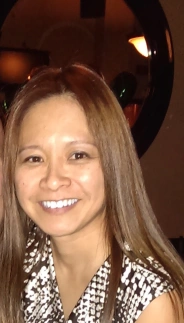
Warmly,
Thy Khuong
-

My Etsy shop

#1 US Seller of Purse Frames
My Main shop

Wholesale purse frames for clutches
Grab My Blog Button
 <a href="http://www.whilebabynaps.etsy.com" target="_self"><img src="https://clutchme.files.wordpress.com/2012/10/etsy-shop-button.jpg" alt="WhileBabyNaps" width="150" height="150" /></a>
As Seen…

Your Ad here


 Clutch-Me.Com